

Loan: Options, Requirements, and Smart Next Steps
Wondering if you can get another car with an existing loan? The short answer is yes. Whether your current vehicle no longer fits your life or you need a second car for work and family, there are clear paths forward. The key is understanding equity, income, and monthly budget so your next vehicle makes financial sense. Many shoppers explore keeping their current car and adding a second payment, trading in to pay off the balance, or rolling part of a payoff into the next loan. You can compare options, check payment structures, and review common requirements before you shop. Explore inventory at inventory, see typical questions at financing-frequently-asked-questions, estimate affordability at payment-options, get a quick trade number at value-my-trade, and learn about simple approvals at get-pre-approved. With the right plan, your second vehicle can be both reliable and budget friendly.
Adding a vehicle while carrying an active auto loan is possible with the right structure. Shoppers across the Dallas Fort Worth area use options like income based approvals, trade in payoffs, and in house financing to move forward with confidence. See where we help buyers at financing-area and locations, learn about the local process at used-car-dealership-irving-tx, and explore simple terms at in-house-financing-car-lot-irving-tx.
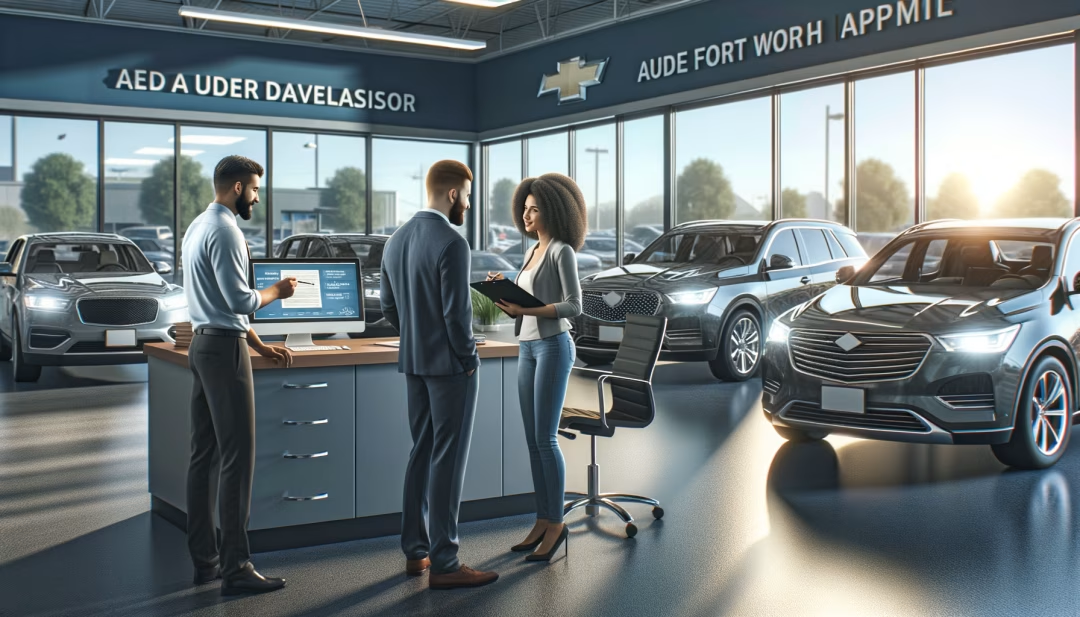
How to Get Another Car With an Existing Loan
If you are paying on a current vehicle but your needs have changed, adding or replacing a car can be straightforward. Lenders and in house programs look at your income, debts, payment history, and the equity in your current car. With a little preparation, you can choose the option that fits your situation and helps keep your budget on track.
Your Main Paths Forward
- Keep your current vehicle and finance a second one, if your income supports both payments and insurance.
- Trade in your current vehicle to pay off the remaining balance and move into a different car with one payment.
- Roll a small remaining balance into your next loan, if allowed, to simplify the changeover.
You can compare vehicles at inventory, read buyer stories at testimonials, and review simple approvals at get-pre-approved. If you want to see how trade equity affects the deal, start at value-my-trade.
Key Factors Lenders Review
- Income and payment to income ratio. Lenders compare your monthly auto payment to your monthly income to confirm it is manageable.
- Debt to income. They look at total monthly obligations compared with income to gauge affordability for one or two payments.
- Equity in your current vehicle. Positive equity may lower the new payment. Negative equity may require more cash down or careful structuring.
- Payment history and stability. On time payments, steady job history, and consistent residence can help.
Scenario 1: Keep Your Current Car and Add a Second
Many families and workers add a second car for scheduling, commute, or business reasons. Approval depends on whether the combined payments fit your budget after insurance, fuel, and maintenance. You can explore flexible payment structures at payment-options and learn about simple document needs at financing-frequently-asked-questions.
- Benefit: Keep a known reliable vehicle while adding capacity for work or family needs.
- Consideration: Insurance for two cars and total monthly cost. Build a realistic monthly plan before you shop.
Scenario 2: Trade In and Pay Off the Balance
If you want one payment and a fresh start, trading in can be clean and simple. When trade value covers your payoff, you can move directly into the next vehicle. If your trade has negative equity, a portion may be covered with down payment, incentive, or structured into the next loan. Get a fast idea of value at value-my-trade and compare financing choices at in-house-financing-car-lot-irving-tx.
Scenario 3: Roll a Small Balance Into the Next Loan
When the remaining balance is small and allowed by the program, rolling it into your next loan can save time. Your new payment will reflect the rolled amount, term, and rate. Make sure the total cost still fits your goals. See how different structures change the monthly at payment-options.
Documentation You May Need
Having clear documentation speeds up review and helps you compare options with confidence. For the smoothest experience, organize the following before you shop.
- Valid identification and proof of residence such as a lease or utility bill. Learn more at financing-frequently-asked-questions.
- Proof of income such as pay stubs or bank statements. See income focused info at income-based-car-financing and car-loans-based-on-income.
- Current loan details including payoff amount, account number, and servicer contact.
Budgeting For Two Vehicles
When keeping your current car, make a realistic budget that includes both auto payments, insurance, routine maintenance, fuel, registration, and any extended coverage. A practical approach is to target a total auto cost that fits within a comfortable share of your monthly net income. If you want predictable ownership costs, explore options at vehicle-warranty. To see payment ranges by vehicle type, browse inventory or larger selections at big-time-inventory.
Credit Challenges and Second Chance Options
If past credit damage or a recent setback is part of your story, second chance programs can help you move forward. Many buyers secure approvals through income verification, stable job history, and consistent residence. Explore resources that focus on real world approvals:
- Credit rebuilding paths: second-chance-auto-loans-irving-tx, auto-loans-after-repossession-irving-tx, car-loans-after-bankruptcy-irving-tx
- In house and flexible programs: buy-here-pay-here-irving-tx, in-house-financing-car-lot-irving-tx, easy-car-financing-irving-tx
Choosing the Right Second Vehicle
Start by defining your primary need. Do you require a commuter car with great fuel economy, a family SUV, or a work ready truck? Select a payment target first, then narrow your search to vehicles that fit your budget and usage. Reliability, warranty coverage, insurance cost, and resale value all matter. For research and tips, visit blog. If you want low upfront cost options, explore low-down-payment-car-dealers and affordable-used-cars.
Local Focus: Dallas Fort Worth Buyers
Buyers across Dallas, Irving, Grand Prairie, Mesquite, Garland, and nearby communities often combine income based approvals with practical down payment solutions. If you are comparing nearby locations and programs, you can review:
Insurance, Title, and Registration
When adding a second car, check how your insurance policy handles multiple vehicles and whether bundling lowers overall cost. For trade in transactions, confirm title transfer timing and how the payoff will be processed. If you roll a balance, understand how the payoff is sent to your current lender and how registration timing aligns with delivery of the new vehicle. Keep copies of all payoff letters and bill of sale documents for your records.
How Equity and Payoff Work
Equity is the difference between what your car is worth and what you owe. Positive equity can reduce your next loan amount. Negative equity requires careful planning. If the negative amount is small, it may be rolled into the next loan or offset with cash down or trade value from an additional vehicle. To get clarity on numbers, start with an estimate at value-my-trade and then compare payments at payment-options.
Proof and Stability Often Matter More Than Perfect Credit
Many programs prioritize steady income, time on the job, and consistent residence. If you experienced a recent job change or rebuild, you can still be considered. See practical guidance tailored to different work types at auto-financing-for-service-industry-workers, car-loans-for-warehouse-and-labor-jobs, and auto-financing-for-self-employed-buyers.
Common Pitfalls To Avoid
- Overextending with two payments without a realistic insurance and maintenance plan.
- Rolling a large negative equity balance that creates a payment you cannot comfortably manage.
- Skipping a careful review of total cost of ownership including fuel and tires.
Helpful Links
- Shop vehicles: inventory, sold-inventory, big-time-inventory
- Plan payments: payment-options, get-pre-approved, value-my-trade
- Learn more: financing-frequently-asked-questions, vehicle-warranty, blog
- About and policies: home, about-us, privacy-policy, contact-us
Bottom Line
You can get another car with an existing loan by choosing the right path for your budget and goals. Whether you keep your current vehicle, trade in to simplify, or roll a small balance, the combination of income verification, practical payment planning, and clear documentation leads to confident decisions. Use the links above to research payments, trade value, local programs, and protection options so your next vehicle fits the way you live and work.
